
What happens when a girl from sunny California sets her Tinder Gold location to the far corner of Northern Europe? For Lauren Reinik, it was the start of a life-changing adventure that led her from the USA to the heart of the Estonian countryside.
Today, Lauren uses social media to document her life in Estonia through American eyes, sharing the unique charm and "weird beauty" she finds in her new surroundings. But her path to the Baltics was anything but predictable—it’s a story of a life-changing text message and the power of finding family in a foreign land.
A Modern Way to Explore
Lauren describes herself as having become "obsessed" with Europe starting in 2018. After a life-changing trip to Poland, she devised a grand plan: she wanted to explore the continent systematically, starting from the furthest corner and working her way across. To ensure she had local guides and friendly faces in every destination, she used Tinder Gold to scout for connections before she even arrived.
"I loved Europe so much that I felt I wanted to start at the very corner of it and meet people in every country," Lauren explains. While she admits that using Tinder for this might be a little embarrassing, her strategy was practical—using technology to find locals who could show her the real side of each country. "I would chat with them and then, once I arrived, I had friends I could meet with to show me around."
Tõnis from Estonia was one of the connections she made while scrolling through her digital map. However, her plan to visit a small country at the edge of Europe took an unexpected detour. Between a global pandemic and the challenges of building an independent life—which saw the native Californian move to South Dakota to find her own path—her Estonian journey was put on hold. For six years, Tõnis and Lauren remained just casual social media friends, until a lonely holiday season in South Dakota changed everything.
A Life-Changing ‘Merry Christmas’
Lauren recalls the exact moment the connection reignited: "I remember it was Christmas. My family lived in a different time zone and wasn’t awake yet, so no one had wished me a Merry Christmas. I was just so sad and lonely. I checked my phone, and that sweet Estonian guy I matched with six years ago was the only one to write to me: 'Merry Christmas, Lauren'."
That simple message sparked a series of long conversations and reignited her dream of travelling around Europe. Although life’s unpredictable circumstances caused several delays, Lauren eventually took the leap and flew to Estonia in October 2024. What was intended as a brief two-week visit quickly evolved into something much deeper; after three months of exploring the country and strengthening her bond with Tõnis, the couple decided to get married.
From Polar Bears to Profound Community
Long before she ever set foot in the Baltics, however, Lauren’s vision of the country was quite different. "Honestly, I always tell people this—I was thinking Estonia was going to be very Nordic, like glaciers and polar bears. I was preparing for that!" she laughs. Instead of glaciers, she found a "depthful culture" and a way of life that resonated with her far more than the environment she had left behind.
What Lauren values most about her new home is the incredible sense of safety and community. She was struck by the sight of children playing outside alone—something uncommon in the US—and by the genuine helpfulness of the people. When their car battery died in a parking lot, she was moved by how many strangers stepped in to help.
"Estonians could argue with each other during the day or get annoyed at their neighbors, but when it comes down to actually needing help, I feel like they come together and help you," Lauren observes. Whether it’s strangers helping push a car or her new family promising "enough potatoes and honey" to get through tough times, Lauren has found a sense of security and belonging. "It’s so old-fashioned here and just so community-based. I'm so happy to be here."
Seeing Beauty in the "Ugly"
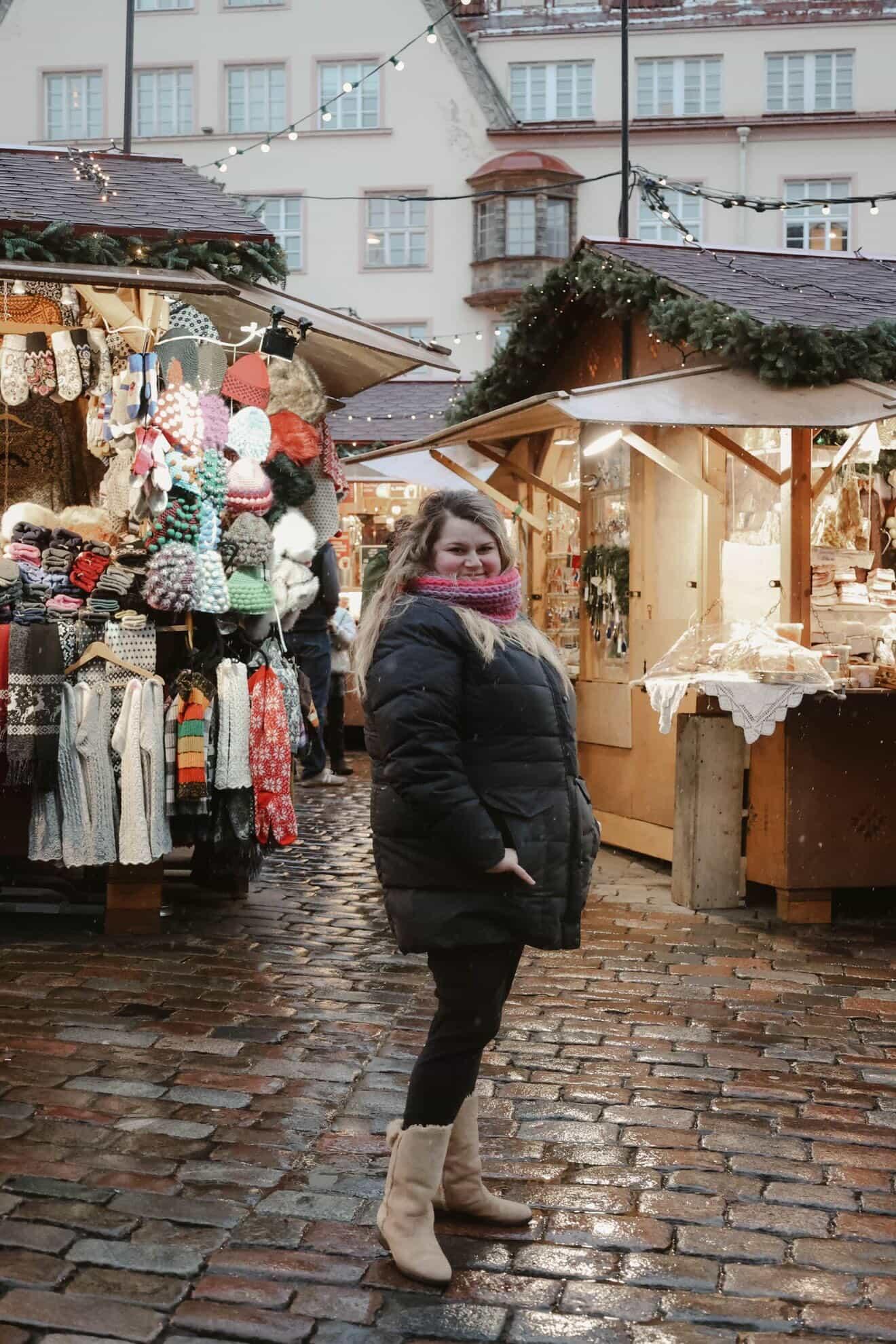
Through her Instagram and TikTok account, @laureninestonia, Lauren has found a creative outlet documenting her life in Estonia. Her goal is to jump in the car once in a while and explore a new corner of the country, showing it to the world through her unique perspective. Interestingly, she often finds charm in places where locals might see only gray remnants of the past.
"I’ve been told before that I see things so differently than typical Estonians," Lauren explains. Whether it’s Soviet-era architecture or the quiet, haunting atmosphere of an abandoned town like Viivikonna, she is fascinated rather than deterred. "I just find the beauty in these things," she says.
The Challenge of the Language
Mastering the local language has been a significant part of Lauren’s experience. Like many newcomers, she started with high energy, but soon realized that learning one of the world’s most difficult languages requires endurance and patience.
"I was very invested when I first came," Lauren admits. However, the intensity of her studies eventually became overwhelming. "To learn the language, it takes so much commitment—it’s like a full-time job. I eventually had to tell my teacher that I needed a break, just because it was a lot."
Currently, Lauren is taking a breather from formal lessons as she waits for a Settle in Estonia language course to begin in August. She wants other newcomers to know that it’s okay to feel overwhelmed and that taking a step back doesn’t mean giving up. Her motivation remains clear: "I know for a fact that if I know the language, life in Estonia would be ten times easier."
Even during her break, Lauren finds small ways to keep practicing. Whether it’s asking her husband for "vett jääga" (water with ice) or using basic phrases with her supportive in-laws, she has found that Estonians truly appreciate the effort. "I can see that they really are happy when someone is interested in learning about the language," she says.
Lauren’s Advice: Build Your Community
Reflecting on her journey, Lauren’s biggest recommendation for anyone moving to Estonia is simple: don't go through it alone. While her husband and his family provided an instant support system, she believes investing in friendships is the true key to feeling at home.
"I highly recommend not being alone here. To just be in your apartment, go out alone, come back alone—I feel like that would not be a good experience," she advises. "Try to meet people and develop close friendships. If they’re not family by marriage, find friends that feel like family. Invest in your friendships here, meet your coworkers, and get to know your neighbors."
Now that Lauren has found her place in the Estonian countryside, she is eager to give back to the country that welcomed her. She dreams of visiting local schools to share her own culture and help students feel more confident with their English.
"I just dream of one day teaching Estonian kids, showing them the best US movies and shows, and helping them with their English as well," Lauren shares. For her, the move to a small Estonian town has been the start of a future filled with potential. "Estonia is so small... things are more possible here than they are in the USA,” she says, ready to see where this journey takes her next.
The Settle in Estonia Programme is a free educational programme provided by the Estonian state which is intended to help the foreigners who have arrived in Estonia to adapt and become accustomed to local life more easily. We offer courses for people who have come to live or study in Estonia and have lived here for less than 5 years. For example, war refugees to whom Estonia offers international or temporary protection, as well as people who have come to Estonia to work or do business here or relocate with their family member. The adaptation program The Settle in Estonia Programme is free for participants. We offer language training and other courses to help you cope with everyday life in Estonia. Read more and register: https://integratsioon.ee/en/kohanemine. The adaptation programme is co-funded by the European Union and the state budget.