
The winner of the 2025 Integration Awards in the category ‘Messenger of the Year’ was Osakond OÜ, which has found a clever way to combine culture and food in the creation of the series Maitserännak Eestimaal (A Culinary Journey in Estonia). Viewers can discover Estonian flavours, places, and stories through two languages and seven chefs. In addition to Estonian cuisine, the series explores Estonian history and folk culture. It focuses on the geographical and cultural diversity of Estonia in an accessible and inspiring way and shows that cooking and culinary arts are an integral part of national culture.
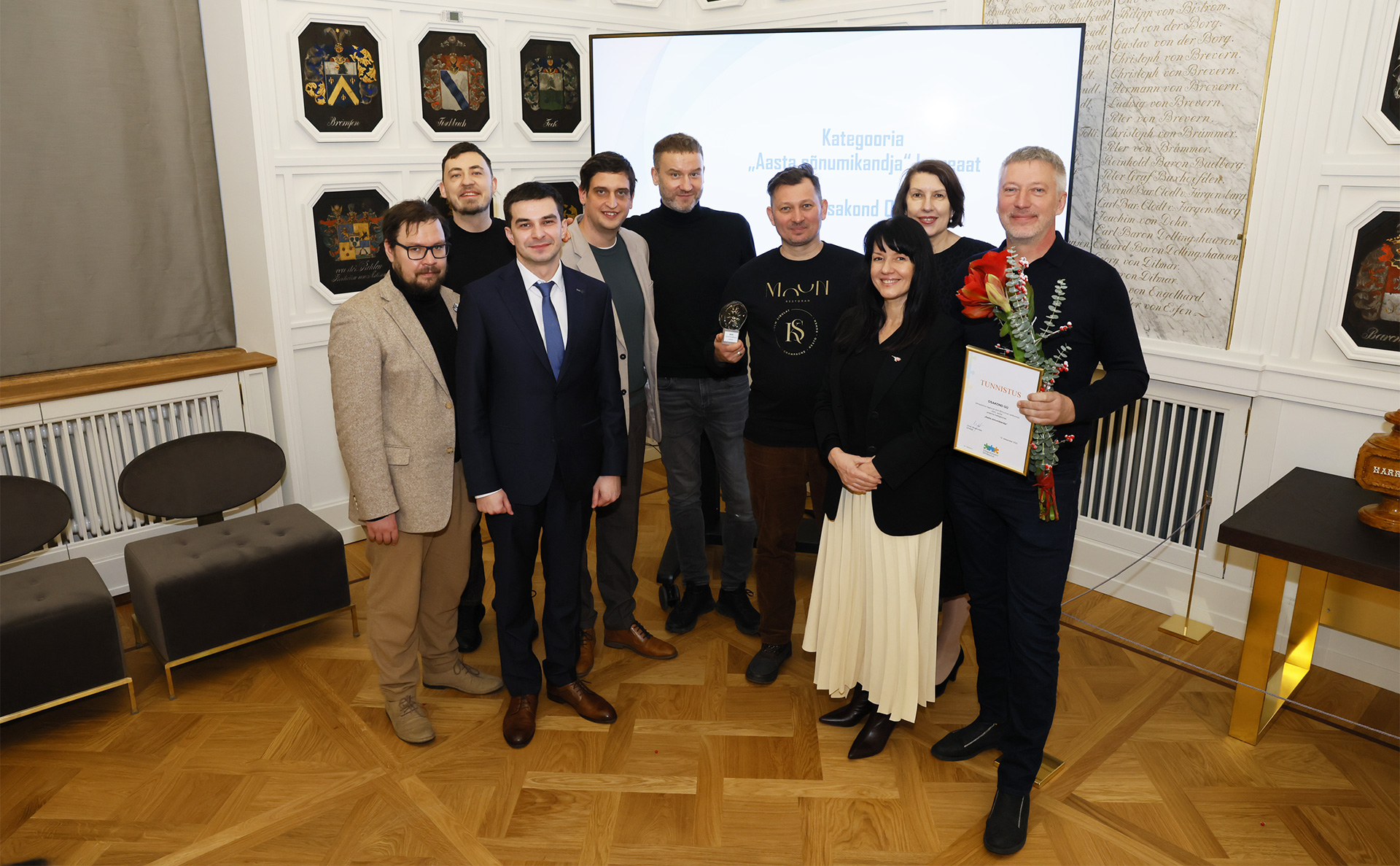
Producer Aivo Spitsonok explains in an interview where the idea came from, what surprised the team the most, and why food has a special ability to bring people closer together.
What is the origin story of creating a series that connects different communities in Estonia through culture and food?
The popularity of topics relating to food in Estonia has soared in recent years. We have more and more Michelin restaurants, and they are no longer just in Tallinn or Tartu, but also in small rural areas. Look how many home cafés and family restaurants we have and how many home café days are organised. And they are wildly popular! If people are clearly interested in something, it should be broadcast.
However, there was another very important reason for launching Maitserännak. In the course of various TV projects, it became clear to me that there are still a lot of people living in Estonia whose knowledge of Estonia ends with Tallinn. And that is not an exaggeration! These people may have been to Egypt or Tenerife, but never to Võru, and they have no idea what life is like in Pärnu. Not to mention Saaremaa and Hiiumaa, or Kihnu, Ruhnu, and Piirissaar Island, as these gems are on located on a different planet entirely in their minds. We have worked very hard to introduce Estonia to foreigners and to attract them here, but what about our own people?! This surprised me and made me think deeply that maybe we can make a difference here.
Was there a personal experience that made you see that food has a special power to bring people together?
Throughout history, food has been a unifier. Family and community events – weddings, funerals, Midsummer, Christmas – always include a shared meal. At the dining table, communication becomes natural and relaxed.
I have also been producing the nature programme Osoon (Ozone) for ten years and have, as a result, explored Estonia. This was how the project Maitserännak Eestimaal was born.
What was the most surprising or touching moment during the filming of the series?
The most surprising thing was to see how easy it is to talk to people with the help of food. Even places where cameras are not usually allowed were opened to us: a nunnery, the back rooms of the presidential palace, and the homes of the Old Believers along Lake Peipus. These otherwise inaccessible places had a novel and exciting effect.
Which shooting day was the most memorable?
One of them was when top chef Roman Zaštšerinski had to go skydiving. Given his fear of heights, we were all ready for the classic ‘No, thank you!’ response. We therefore had a back-up plan – he would cook for the instructors. But Roman decided to jump instead. And he did! At that moment, we realised that life has a habit of making us go off-script. All these unexpected situations made the show emotional, and that is what viewers liked.
What role does cuisine play in integration?
Food is the part of culture that is the least scary for foreigners. It establishes contact, removes the communication barriers, and helps different people understand each other. I think this is one of the most natural beginnings for integration. Folk costumes and song festivals come after.
What do you notice about Russian-speaking viewers – how do they receive the series?
After the series aired, we received a lot of feedback and interest in the places and people we saw. I now know quite a few Estonians who go to Narva to buy fish from Sergei. A large number of viewers have said they will definitely take part in the next election of the Seto King. There has also been strong interest in Saaremaa and Hiiumaa.
In addition to making Estonia better known, it is also a great way to learn languages. Language courses are great, but the best way to learn a language is through practice. We are glad that we managed to get people travelling around Estonia and we hope that they communicated with each other more thanks to it.
What message did you want to send with the series?
We wanted to encourage viewers to discover new places and people. What is written somewhere or what someone claims to have heard is not always the truth. You can only truly trust your own experiences.
Have you received any feedback from people whose perception of Estonia or its culture changed after watching the series?
No one has told me directly that their understanding of Estonia and the local culture has changed completely after watching the series. However, given how much feedback we have received and how many people have said that it is their favourite TV show, I would like to think that we have managed to cause a bit of a shift in the minds of people.
I would also like to point out is that the Old Believers near Lake Peipus, the Seto people with their king, and the people living on Kihnu eating seagull eggs and seal meat – they all exist today in Estonia in a completely authentic form. They are not museum exhibits, but an authentic culture.
What would be an ideal follow-up to Maitserännak Eestimaal?
It was a boldly structured series from the outset. In just two seasons, top chefs have become top TV presenters and their potential is far from exhausted. This is just the beginning. There are still many stories in Estonia waiting to be told with their help.