
The winner of the 2025 Integration Awards in the category ‘Bridgebuilder of the Year’ was the Education Team of the Estonian Sports and Olympic Museum, which has created an environment that brings together young people from different cultural backgrounds through sport and museum education. The museum has become an important bridgebuilder, showing how sport can act as a common language and strengthen the community. More than 700 young people have taken part in their programmes, several integration camps have taken place, and a travelling exhibition Sport kui ühine keel (Sport as a Common Language) has been created to reach students who would otherwise not come to the museum. The activities foster language learning, cultural awareness, and friendships, and help young people build a bond with Estonia.
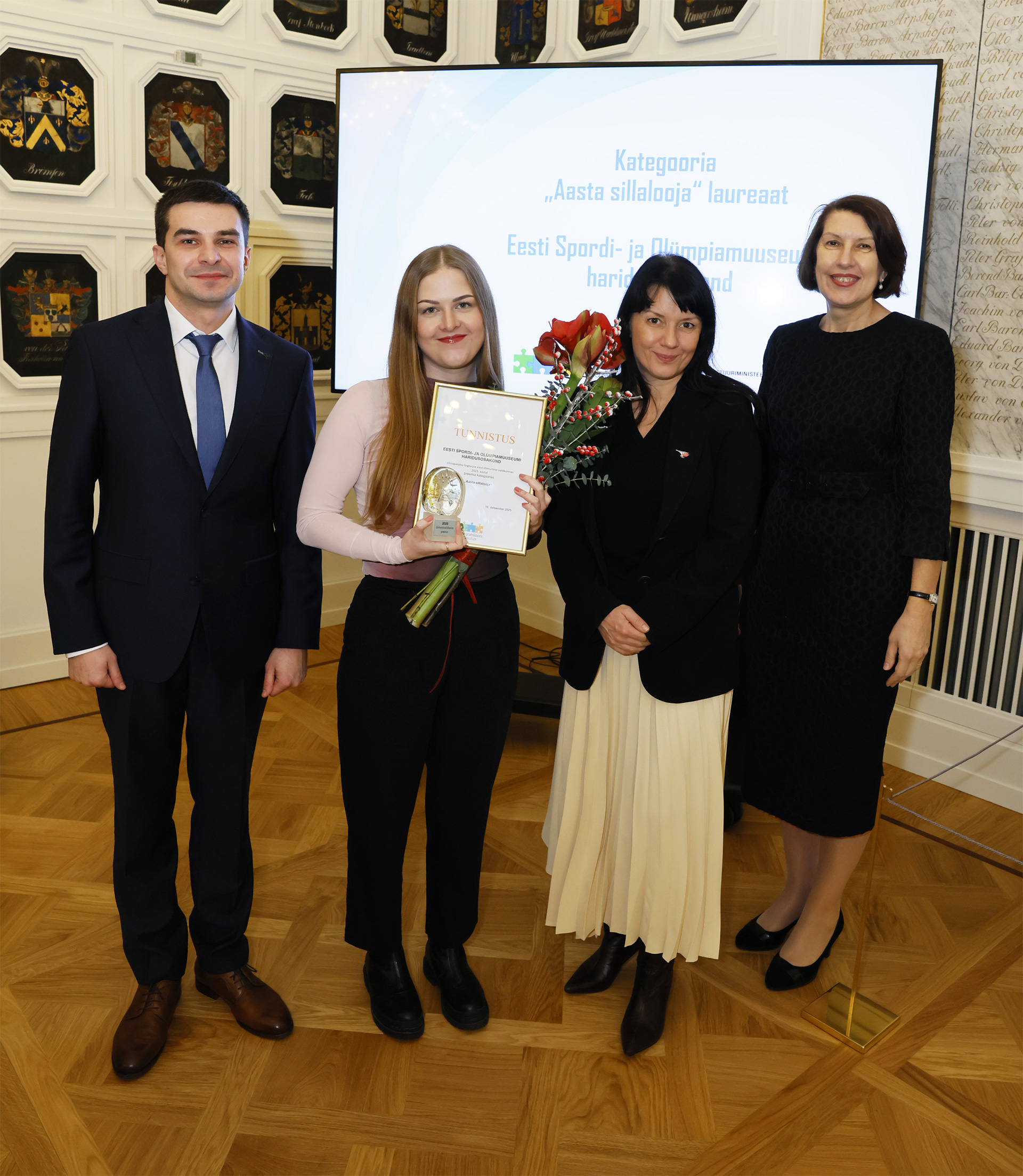
Ave Vilpo, Head of Education at the Estonian Sports and Olympic Museum, explains in more detail.
How did you come up with the idea of using sport as a tool for integration?
At the Sports Museum, we are always open to new opportunities. We started with a project inviting young people with a different mother tongue living in Estonia to the museum. We realised that travelling museum lessons could be a good way to reach these young people. We started to focus more on the topic after the start of the full-scale Russian war in Ukraine, when we organised a family day at the museum to bring together people from Ukraine, Estonia, and other countries who now live in Estonia. Before going deeper into this project, we also researched the current situation in Tartu and found that people who have moved here from other places often lack a community and everyday activities. After the first tests, we realised that the topic was important and resonated with people, so we decided to continue the project.
What does it mean for you personally to be a bridgebuilder for young people?
I very much hope that young people who visit the Sports Museum feel welcome and valued in our society, whatever their cultural background.
What changes have you seen in young people who have participated in the museum’s programmes or camps?
It is difficult to see the change in young people during a one-off museum programme. Sometimes, however, just one programme can give young people the courage to practise a language and open up more. They are more daring to ask, to answer, and to be wrong. They also try to speak up, even if they feel insecure.
In the camps, you can see more of a change, as we spend three days with the children. Children find the courage to communicate, express themselves, ask for help, and talk about themselves. When young people feel more comfortable with each other linguistically and have already got to know each other, they also enjoy the activities more. It also gives young people new insights and broader horizons by interacting and learning about different cultures.
Can you think of a case that showed that sport brings people together?
We often visit different institutions and training sessions with the children. We went to a multisport training session at the University of Tartu Sports Club, where children created pyramids in groups based on pictures. The children were very excited, so the pyramids kept rising. There was also a unifying force in the different sports that are familiar to everyone, regardless of their origin, such as football or tag.
I believe that sport and education play a very important role in integration. Young people spend most of their time at school, which means this is where their personalities are shaped. Additionally, many young people are involved in sports, which is a good way to integrate, as they can practise the language there. School and sport can be safe environments for integration.
The projects promote mutual understanding through language learning and cooperation, creating the safest possible environment for young people and focusing on positive aspects. It can relieve certain tensions and break down stereotypes.
There is also interest in integration activities for adults, which could be an exciting new challenge and target group for us.
What is the most important thing you want to pass on to young people through the programme?
For us, it is a priority to teach tolerance towards each other, regardless of the origin or cultural background of the other person. We may differ and sometimes disagree, but it is important to maintain humanity. We also want to share sports culture and values. I believe that broadening the horizons of young people about Estonian and other cultures can help them to be more understanding of each other and thus create a more inclusive environment.
We hope that the museum will continue to be a place where people feel welcome and can integrate. Our active exhibition environment is a great place to bring people together, spend time actively, and learn about the Estonian culture. We are trying to create a safe environment for language learners to encourage them to practice their Estonian more.